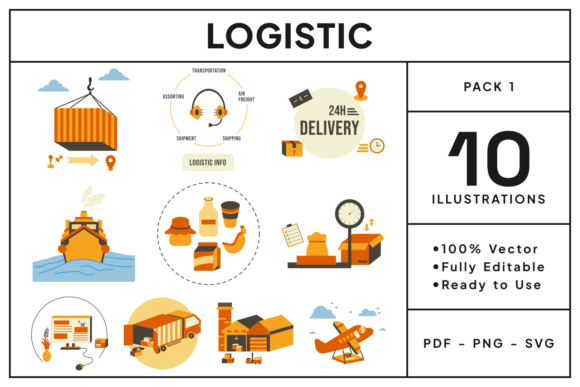
Logistic Vector Graphics: 10 Essential Illustrations
As a digital product creator who has spent years navigating the complexities of Etsy, Creative Fabrica, and various print-on-demand platforms, I approach every new graphic design asset with a critical eye. It is not enough for an image to look good on a screen; it must translate into a sellable digital product that solves a problem for the end user. Recently, I evaluated a set titled 10 Logistic Vector Illustrations, and my assessment focuses on its viability for commercial use in the transportation and distribution sectors.
Upon first inspection, the visual personality of this collection is distinctly professional and utilitarian. Unlike the playful or whimsical styles often found in nursery prints or party invitations, these illustrations exude a modern, clean, and corporate aesthetic. The mood is efficient and structured, appealing directly to business owners, logistics managers, and supply chain professionals. This specific niche appeal is crucial because it targets a B2B (business-to-business) audience rather than the typical B2C crafters. For sellers looking to diversify their shops beyond seasonal bundles and decorative layouts, this type of commercial design offers a gateway into the lucrative world of corporate templates and industry-specific media.
Strategic Applications for Online Sellers
The true value of a design bundle lies in its versatility. While 10 Logistic Vector Illustrations might seem niche, the potential applications for a creative entrepreneur are surprisingly broad if you know where to look. For those running a handmade business that caters to corporate clients, these assets can be transformed into high-value printable designs. Imagine creating a series of training manuals, safety posters, or workflow infographics for warehouse managers. These are tangible products that businesses need year-round, unaffected by seasonal trends.
For users of cutting machines, these files can serve as the foundation for a specialized Cricut project. While they may not suit intricate sticker design work due to their linear nature, they are perfect for creating bold decals for delivery vans, warehouse signage, or branded equipment labels. In the realm of sublimation design, these vectors can be applied to travel mugs, tumblers, and tote bags intended as corporate gifts or employee appreciation items. A mug design featuring a stylized truck or shipping icon makes for a practical gift for a logistics coordinator.
Furthermore, Canva template sellers can leverage this collection to build "Annual Report" or "Company Presentation" templates. By integrating these graphics into slide decks, you provide small business owners with a ready-made brand identity tool. Social media managers also require social media graphics that communicate reliability and speed; these illustrations fit perfectly into LinkedIn carousels or Instagram stories focused on supply chain updates. Whether you are creating a t-shirt design for a trucking company reunion or a packaging design element for a shipping startup, the utility here is rooted in clear communication.
Enhancing Product Presentation and Trust
In the crowded landscape of the creative marketplace, presentation is everything. When listing an Etsy product or a download on Shopify, your thumbnails must convey professionalism instantly. Using 10 Logistic Vector Illustrations in your own product mockups can elevate the perceived value of your shop. If you sell business planners or organizational tools, incorporating these transport-themed icons suggests a focus on movement, progress, and efficiency.
Visual hierarchy is key when designing listing images. These assets work exceptionally well in large product previews where their clean lines remain sharp. They help establish small business branding consistency across a store. For instance, if you are launching a themed bundle for "Small Business Owners," using these vectors in your promotional visuals ties the collection together cohesively. Customer trust increases when the imagery looks polished and industry-appropriate rather than generic or clip-art style. A well-placed illustration in a thumbnail can significantly improve click-through potential by signaling exactly who the product is for.
Ideal Use Cases and Limitations
Knowing where an asset shines is just as important as knowing where it falters. 10 Logistic Vector Illustrations works best in contexts that require clarity and scale. They are ideal for product mockup scenes involving vehicles, warehouses, or office settings. They excel in digital downloads meant for large-format printing, such as wall art for industrial offices or banners for trade shows. Because they are vector-based, they maintain crisp edges regardless of size, making them superior for merchandise graphics that need to be scaled up for apparel or vehicle wraps.
However, caution is required when applying these to delicate projects. Due to their structural and often linear nature, they may not hold up well as tiny details on complex sticker design sheets where fine lines could get lost during weeding. They are also less suitable for crowded thumbnails where too much detail creates visual noise. If you are working with dark backgrounds, ensure you have the appropriate file formats, as some light-colored elements in a logistic theme might lack sufficient contrast without adjustment. Additionally, for Cricut or Silhouette users, verify that the cut lines are clean; overly complex internal paths in technical drawings can sometimes cause tearing in vinyl materials.
Practical Seller Notes for Commercial Success
Before publishing any listing featuring 10 Logistic Vector Illustrations, rigorous testing is non-negotiable. Always test the design on real mockups to see how it interacts with different textures and lighting. Preview your listing images as they would appear on a mobile device to ensure the visual hierarchy remains intact. Check how the colors look on both white and dark backgrounds; logistic themes often use blues, greys, and oranges, which need to pop against various backdrops.
If you are offering these as part of a design bundle, organize your files clearly. Customers expect distinct folders for SVG, PNG, and EPS formats. Verify the PNG transparency to avoid unsightly white boxes around your icons. For those creating Canva templates, pair these illustrations with strong typography. A bold sans serif font complements the industrial feel, while a clean display font can add a modern touch. Avoid overly decorative script fonts unless you are aiming for a specific ironic contrast, as it may clash with the serious tone of the illustration.
Finally, and most critically, confirm the commercial license terms. As a seller, you must understand whether you can sell the raw files or only finished products like print-on-demand items or printed stationery. Misunderstanding licensing can lead to account suspensions on major platforms. By treating 10 Logistic Vector Illustrations not just as art, but as a functional tool for communication, you can create a robust line of products that serves the vital transportation and distribution industries while building a reputable, professional online store.